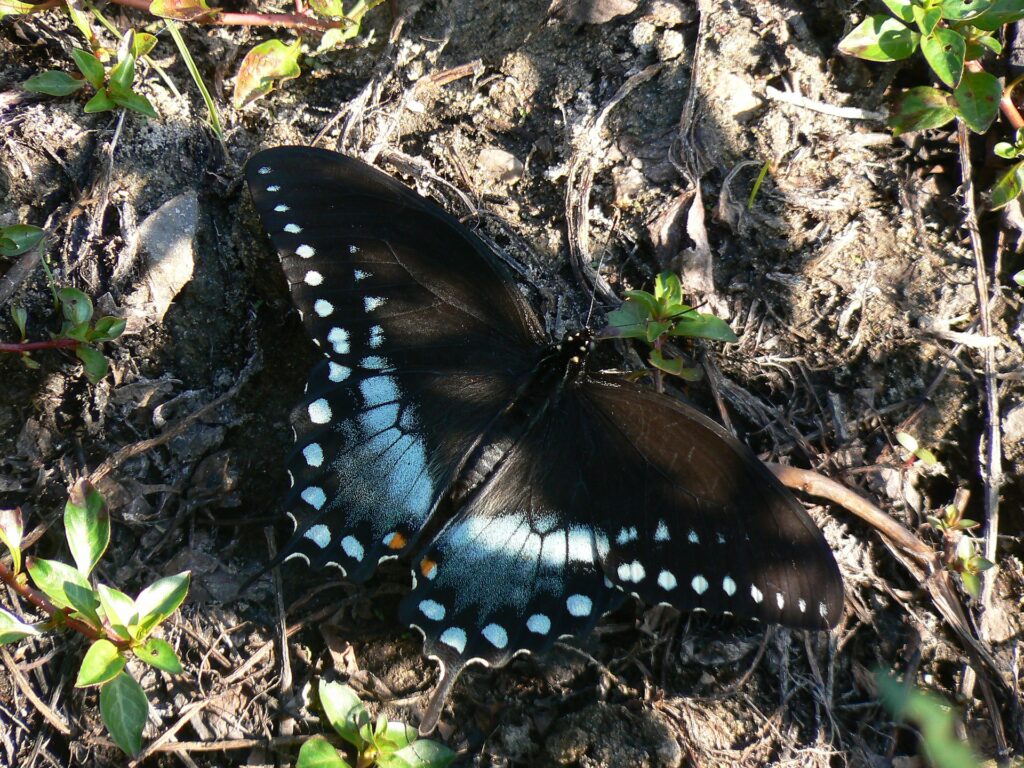
Spicebush swallowtail butterflies belong to the family Papilionidae, which include the largest butterflies in the world. They mainly live in woody and swampy areas throughout eastern North America. They eat from plants like honeysuckle and Joe-Pye weeds. Unlike other butterflies, this species flaps their wings while eating. Adult male spicebush swallowtails have blue-green hind wing areas while adult female spicebush swallowtails have blue hind wing areas.
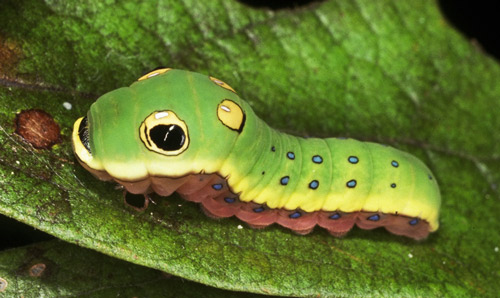
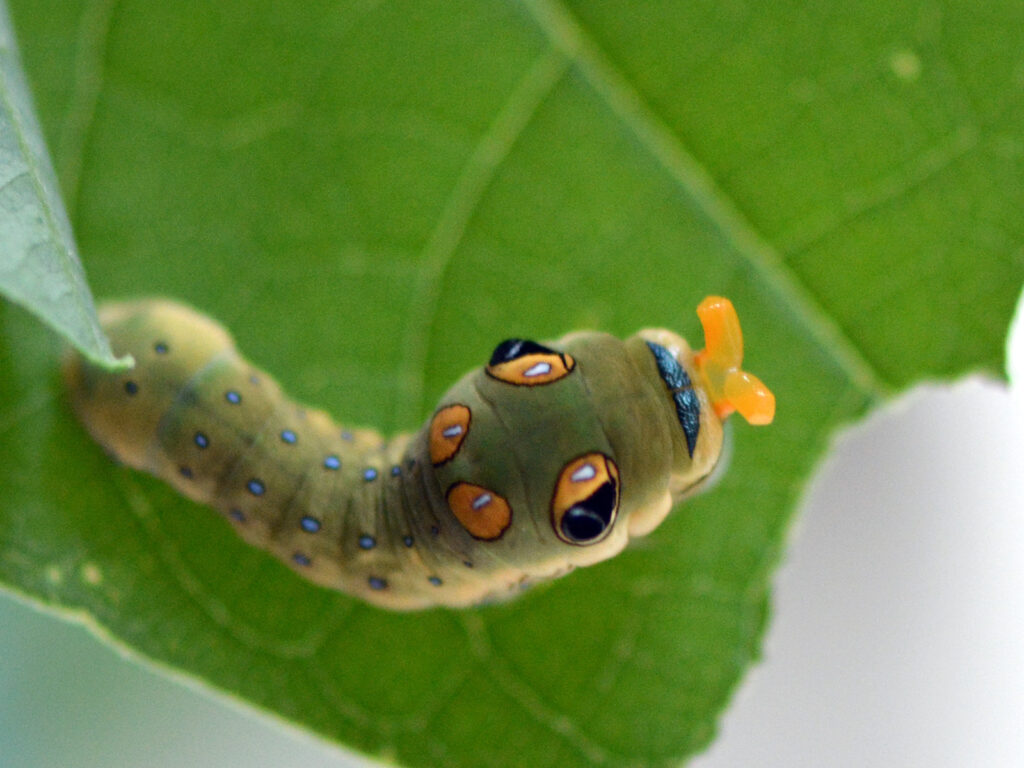
The larvae of this butterfly uses mimicry in a variety of ways. As a young larvae, they’re brown to resemble bird droppings. As they grow, they turn green and begin to mimic a snake as a defense mechanism. Not only do the large black spots on their coats look like eyes, but their osmeteria, a defense organ, can extend to look like a snake’s tongue.
The spicebush swallowtail butterfly is threatened due to the decline of their host plant, the spicebush.
Hall, Donald W, and Jerry F Butler. “Spicebush Swallowtail.” Spicebush Swallowtail – Papilio Troilus Linnaeus, University of Florida, Sept. 2015, entnemdept.ufl.edu/creatures/bfly/spicebush_swallowtail.htm.
